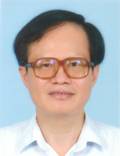
Chen, Bor-Sen (陳博現)
Tsing Hua Professor of Electrical Engineering and Computer Science
Ph.D.,
System Control, Signal Processing and Communication, Systems Biology
E-mail: bschen@ee.nthu.edu.tw
WWW: http://www.ee.nthu.edu.tw/bschen/
Dr. Bor-Sen Chen received the B.S. degree from Tatung Institute of Technology,
一、個人基本資料
|
中文姓名: 陳博現 |
英文姓名:Bor-Sen Chen |
|
E-mail: bschen@ee.nthu.edu.tw |
|
|
個人網站:http://www.ee.nthu.edu.tw/bschen/ |
|
|
聯絡地址: (30013) 新竹市清華大學電機工程學系 |
|
|
聯絡電話:(03)573-1155 傳真號碼:(03)571-5971 |
|
二、學歷
|
1.大同工學院 電機工程學士 1970 2.中央大學 地球物理碩士 1973 3.美國南加州大學 電機博士 1982 |
三、經歷
|
服務機關 |
職稱 |
起迄時間 |
|
大同工學院 |
電機系講師,副教授,教授 |
1973-1987 |
|
清華大學電機系 |
教授 |
1987-迄今 |
四、國際學術服務
|
服務機關 |
職稱與時間 |
|
Asian Journal of Control |
Editor (1999-) |
|
IEEE Trans. Fuzzy Systems |
Associate Editor (2001-2006) |
|
International Journal of Fuzzy Systems |
Editor-in-Chief (2006-2008) |
|
International Journal of Control, Automation and Systems |
Editorial Advisory Board (2003-now) |
|
Fuzzy Set and Systems |
Editorial Board (2006-now) |
|
International Journal of Systems and Synthetic Biology |
Editor-in-chief(2009-2011) |
|
BMC Systems Biology |
Editorial Board (2010-now) |
|
Journal of Soft Computing and Applied Informatics |
Editorial Board (2011-now) |
五、學術獎勵
|
1.國科會傑出研究獎4次 (1988-1996) |
|
2.國科會特約研究人員獎 (1996-2002) |
|
3.傑出人才發展基金會傑出人才獎座 (1999-2003) |
|
4.中華民國自動控制學會第三屆傑出自動控制工程獎 (2001) |
|
5.國際電機電子工程學會IEEE Fellow (2001) |
|
6.清華大學電機資訊講座教授 (2003) |
|
7.ISI論文高度引用學者 (2005) |
|
8.中華民國模糊學會第一屆傑出貢獻獎 (2005) |
|
9.IEEE Taipei Section第一屆最佳影響力獎 (2006) |
|
10.中華民國自動控制學會會士 (2006) |
|
11.教育部學術獎
(2008) |
|
12.有庠科技講座(通訊)(2010) |
|
13.國科會學術攻頂計畫主持人(2010-2015) |
|
14.2010國際基因工程設計競賽銀牌獎 |
|
15.教育部國家講座主持人 (2012) |
六、從事研究過程及重要學術研究成果
陳博現教授研究主題專注於系統的強健性控制理論及應用。當一個系統遭受參數擾動、模型不確定性及內外在環境干擾下,系統如何設計才能在這些不確定因素下維持良好的性能,這是高性能系統設計非常重要的實際課題。陳教授近30年來提出許多性能優良的強健設計理論,然後應用到控制系統、訊號及通訊系統、生物系統。並將這些強健設計理論從線性系統擴充到非線性系統、非線性隨機系統及非線性隨機偏微系統。理論架構及應用範圍漸趨統合完整。
陳教授主修自動控制,副修訊號處理,1982年從USC回到大同工學院時,致力於強健性控制研究,主要是設計控制器能在內在擾動及外在干擾下使受控系統能穩定並達到目標,並應用於大同車床及工具機的強健切削力控制。約發表了20篇論文,對大同工學院當時研究能力有很大提升作用。1987年轉到清華大學電機系,致力於強健控制理論及訊號處理的研究,並應用於機器人、反飛彈、人造衛星(與太空計畫室合作),及無線通訊的應用上,研究成果相當傑出,並獲得4次國科會傑出獎,及第三屆中華民國自動控制學會傑出工程獎。後來專注模糊控制理論及其在非線性系統強健性控制的應用,成就斐然,並因在模糊控制理論及其應用表現傑出獲選為IEEE Fellow (2001)及獲得第一屆中華民國模糊學會傑出貢獻獎,並曾為IEEE Trans. Fuzzy Systems期刊的Associate Editor (2001~2006),及Fuzzy Set and System期刊的Editorial Board及Journal of International Fuzzy
Systems期刊的Editor-in-Chief (2006~2008)。 2002~2006年,陳教授由旁聽生物系統課程開始,轉而致力於生物資訊及系統生物學之研究,7年來共發表了50篇生物資訊、系統生物學及合成生物學的相關期刊論文,論文水準相當高,其中在相關領域最好的期刊Bioinformatics,BMC Bioinformatics及BMC Systems Biology共發表20篇,並獲邀國際研討會演講,成為International Journal of Systems
and Synthetic Biology的Editor-in-Chief (2009~)及國際著名BMC Systems Biology 的Member of Editorial Board,並以系統方法研究強健生物IC電路設計獲得國科會2010年學術頂域的攻頂計畫。
目前陳教授致力於隨機非線性控制及濾波設計,在IEEE AC及SIAM J. Control and Optimization發表幾篇重要的強健H∞及H2/H∞控制理論相關論文,並將其應用於系統生物學中的基因及蛋白質網路,及在各種molecular noises干擾情況下的強健性生化電路設計。今年並成立”基因電路設計”實驗室,希望其將在未來合成生物的工程設計扮演重要的角色,並能做為台灣生物電路設計IC化的推手。不久前美國Science Publishers主動邀請寫一本合成生物學的書,可見陳教授在基因電路設計理論及方法在國際上有很豐碩的成果及重大的影響力。陳教授近30年來研究論文的理論都相當嚴謹,推理明確,並能與實證相配合,在IEEE Trans.發表超過80篇全幅論文,在機械及航太的最好期刊ASME及AIAA亦各有4篇及3篇全幅論文,主要是應用到工具機、人造衛星及飛彈追蹤能力增強。陳教授的論文總共被SCI文章引用約4000次,其中有一篇超過300次,一篇超過200次及另6篇超過百次。近10年來(2000-2010)發表論文中,有5篇論文是屬highly cited papers (top1%)。並因在台灣電機領域論文中被引用次數最多,而獲得IEEE Taipei Section第一屆最佳影響力獎。這些顯示陳教授的研究質與量均非常傑出,在國際相關學術領域亦屬第一流的。陳教授研究一直都非常積極,作為學生表率,所有論文都是親自與自己的學生共同研究完成,並對研究生論文品質要求嚴謹。因此學生在學術界及工業界表現都相當優異,例如二位學生王文俊教授及林志民教授已獲得IEEE Fellow,林俊良教授獲得三次國科會傑出獎,翁慶昌教授在國際機器人比賽獲得7次大獎,並被遠見雜誌選為新台灣之光100,另一位碩士學生夏幼羚多年前因天弓飛彈飛行控制設計成就獲選為全國十大女青年。
控制工程的一個很重要的設計理念,就是要受控系統能在內在參數擾動及受外在環境干擾情況下,達到設計目標。此就是所謂的強健性控制(robust control),雖然robust control有時相當理論,但是卻是非常實際,因控制設計如果沒有考慮內、外在的干擾因素,設計出來的系統就是不實用,不能在內外在干擾環境下工作很好。陳教授近30年來主要研究主題就是要設計一些控制系統,能在內、外在干擾情況下工作得很好,從最初的線性系統,非線性系統,發展到非線性隨機系統。並應用在訊號處理,通訊系統,生物資訊,系統生物學及合成生物學的不同領域,並在不同領域都獲得非常傑出的成果。
陳教授學術研究主要貢獻分述如下:
I.
控制系統領域
1a. 線性強健性控制器設計及應用:
早期陳教授強健控制方法主要從nominal system設計,再壓制內外在雜訊或delay的干擾,並達次佳化設計,想法新穎、簡單實用,性能優良,應用廣泛相當受歡迎。其主要成果及被SCI引用次數如下:
1.
S. S. Wang and B. S. Chen, ”Robust stability of
uncertain time-delay systems” Int. J.
Control, 46(3), 963-976, 1987.
2.
B. S. Chen, C. C. Lin, ”On the stability bounds
of stability perturbed systems” IEEE
Trans. Automatic Control, 35(11), 1265-1271, 1990.
3.
J. C. Shen, B. S. Chen and F. C. Kung, ”Memoryless stabilization of
uncertain dynamic systems-Riccati equation approach,”
IEEE Trans. Automatic Control, 36(5),
638-642, 1991.
4.
B. S. Chen and Y. M. Cheng, "Structure-specified H∞ optimal control
design for practical applications: A genetic approach" IEEE Trans.
Control Systems Technology, 6(4), pp. 707-718, 1998.
5.
B. S. Chen, Y. M. Cheng and C. H. Lee, "A genetic approach to mixed
H2/ H∞ optimal PID control" IEEE
Control System magazine,
15( 5), 51-60, 1995.
1b.
強健模糊控制器設計理論:
過去十五年來,陳教授在強健模糊控制理論及設計有很大的突破,並應用到非線性系統的控制設計上,主要是用fuzzy
membership function內插幾個linearized systems來逼近非線性系統,然後用LMI來代替非線性系統的Hamilton-Jacobi-Inequality
(HJI)。因此困難的非線性系統的控制設計問題可用Matlab Toolbox來輔助設計,並達到H2/H∞功能的強健規格,可壓制近似誤差及內外在干擾來達到控制目標。對非線性系統的強健控制及濾波器設計有革命性的突破,可應用於衛星姿態及飛彈的控制,及生物電路及合成生物等非線性系統設計,因而此論文被大量引用,使陳教授在2001年因強健模糊控制理論及應用的傑出表現成為IEEE Fellow。最近陳教授主要的模糊控制理論及設計專注於非線性隨機偏微分系統,希望可應用於非線性的流體、熱導、波動等機械系統及生物的biodynamic system及生態系統的控制研究及設計。下列5篇主要論文在探討強健模糊系統穩定,及追蹤控制理論及設計方法,可壓制模糊近似誤差及內外在干擾而達成非線性系統的控制目標。因屬世界首創,每篇都是highly cited paper:
1.
B. S. Chen, C. H. Lee and Y. C. Chang, "H∞ tracking design of
uncertain nonlinear SISO systems: adaptive fuzzy approach" IEEE Trans. Fuzzy Systems, 4(1), 32-43,
1996.
2.
B. S. Chen, C. S. Tseng and H. J. Uang,
"Robustness design of nonlinear uncertain system via fuzzy linear
control" IEEE Trans. Fuzzy Systems,
7(5), 571-585, 1999.
3.
B. S. Chen, C. S. Tseng and H. J. Uang,
"Mixed H2/H∞ fuzzy output feedback control design for nonlinear dynamic
systems: An LMI approach" IEEE
Trans. Fuzzy Systems, 8(3), 249-265, 2000.
4.
C. S. Tseng, B. S. Chen and H. J. Uang,
"Fuzzy tracking control design for nonlinear dynamic systems via T-S fuzzy
model" IEEE Trans. Fuzzy Systems,
9(3), 381-392, 2001.
5.
C. S. Tseng and B. S. Chen, "H∞ decentralized fuzzy model reference
tracking control design for nonlinear interconnected systems," IEEE Trans. Fuzzy Systems, 9(6),
795-809, 2001.
1c. 強健控制在機器人應用:
在1980年代末期,機器人控制設計在世界及台灣都極受矚目。我們也發表了有關機器人強健控制的理論論文,主要是利用機器人的skew
symmetry特性及非線性H∞追蹤控制理論來使機器人在不確定及干擾環境下能有想要的行為,有嚴謹證明及簡單設計方法,亦獲業界相當喜好。據中華大學李柏坤教授轉告,2006年在圓山大飯店舉辦的IEEE SMC研討會,有日本來的教授要找我,說他們的機器人用我們的強健控制理論在驗證,可見我們的理論受到實務界歡迎的。
1. B. S.
Chen and T. S. Lee and J. H. Feng, "A Nonlinear
H∞ control design in robotic systems under parameter perturbation and external
disturbance" Int. J. Control, 59(2), 439-461, 1994.
2. Y. C.
Chang and B. S. Chen, "A nonlinear adaptive H∞ tracking control design in
robotic systems via neutral networks" IEEE Trans. Control Systems
Technology, 5(1), 13-29, 1997.
3. B. S.
Chen, Y. C. Chang and T. C. Lee, "Nonlinear mixed H2/H∞ control for robust
tracking design of robotic systems," Int. J. Control, 67(6),
837-857, 1997.
4. B. S. Chen,
Y. C. Chang and T. C. Lee, "Adaptive Control in Robotic Systems with H∞
Tracking Performance" Automatica, 33, 227-234, 1997.
5. B. S.
Chen, H. C. Uang and C. S. Chang," Robust
tracking enhancement for robot systems including motor dynamics
: A fuzzy dynamic game approach" IEEE Trans. Fuzzy Systems,
6(4), 538-552, 1998.
6. Y. C.
Chang and B. S. Chen, "Robust tracking design for both holonomic
and nonholonomic constrained mechanical systems:
adaptive fuzzy approach" IEEE Trans. Fuzzy Systems, 8(1), 46-66, 2000.
1d. 強健控制理論在人造衛星姿態及飛彈導引控制應用:
本研究室亦曾在當時徐佳銘主任引介下和國家太空計畫室合作做ROC一號衛星姿態強健控制研究,並發表研究成果於相關衛星控制最好期刊。隨後與中山科學院合作,從事有關飛彈強健導引控制的理論設計研究,成果亦發表在相當好的相關期刊。我們時常收到從以色列及中國大陸研究人員來要相關抽印本及資料,雖然被引用次數不突出,但顯然相當受實際研發人員的重視。
1. C. S.
Wu, B. S. Chen and Y. W. Jan, "Unified design for H2/ H∞ and mixed control
of space craft" AIAA Journal of Guidance, Control and Dynamics,
22(6), 884-896, 1999.
2. B. S.
Chen, C. S. Wu and Y. W. Jan, "Adaptive fuzzy mixed H2/ H∞ control of
spacecraft" IEEE Trans. Aerospace and Electronic Systems,
36(4), 1343-1359, Oct 2000.
3. C. S.
Wu and B. S. Chen, "Adaptive attitude control of spacecraft: A mixed H2,
H∞ approach" AIAA Journal of Guidance, Control and Dynamics, 24(4), 755-766, 2001.
4. B. S.
Chen, Y. Y. Chen and C. L. Lin, "Nonlinear fuzzy H∞ guidance law with saturation
of actuators against maneuvering targets" IEEE Trans. Control Systems
Technology, 10(6), 769-779, 2002.
5. C. L.
Lin, H. Z. Hung, Y. Y. Chen and B. S. Chen, "Development of an integrated
fuzzy-logic-based missile guidance law against high speed target" IEEE Trans. Fuzzy Systems, 12(2),
157-169, 2004.
1e. 非線性隨機H∞強健性控制:
非線性隨機H∞強健性控制是控制理論及設計的最高境界,此種控制因必須考慮非線性、系統隨機雜訊、環境隨機干擾、強健性,故為相當困難的問題。必須兼顧幾種領域的訓練及相當整合能力才能解決此種控制領域最困難的問題。陳博現教授與其以前的博士後張維海教授首先於2004年發表一篇線性隨機H2/ H∞強健性控制設計論文後,開始擴展到非線性方面的設計,探討隨機系統最廣泛的穩定及可偵測問題,並發表在控制理論最好的期刊。此外,也探討相關的非線性H∞隨機濾波器設計,並發表於訊號處理最好期刊。其後亦有幾篇相關非線性隨機控制及濾波發表,並應用到量子系統的強健H∞追蹤控制,生物基因網路的分子雜訊放大及濾波原理,探討基因及生化網路設計合成。陳博現教授研究室在非線性隨機系統的強健控制及濾波理論及應用堪稱世界一流的!其主要研究成果如下,其中一、二、四都是highly cited papers,其中第二篇被Science Watch選為a featured Fast-Moving Front
Paper及被Essential Science Indicator選為The Most-Cited Paper in the research area of Mathematics.
1.
B.S. Chen and W. Zhang, “Stochastic H2/ H∞ control with state-dependent
noise” IEEE Trans. Automatic Control,
49(1), 45-57, 2004.
2.
W. Zhang and B.S. Chen, “State feedback H∞ control for a class of
nonlinear stochastic systems” SIAM J.
Control and Optimization, 44(6), 1973-1991, 2006.
3.
W. Zhang, H. Zhang and B.S. Chen, “Generalized Lapunov
equation approach to state-dependent stochastic detectability criterion” IEEE Trans. Automatic Control, 53(7),
1630-1642, 2008.
4.
W. Zhang, B.S. Chen and C.S. Tseng, “Robust H∞ filtering for nonlinear
stochastic systems” IEEE Trans. Signal
Processing, 53(2), 589-599, 2005.
5.
W. Zhang and B.S. Chen, "On stabilization and exact observability of stochastic systems with multiplicative
noise and their applications," Automatica,
40, 87-94, 2004.
II.
訊號與通訊領域
2a.
強健濾波器設計及訊號處理:
在隨機波道擾動及雜訊干擾下,如何設計強健濾波器是訊號處理重要課題之一,亦是使濾波器是否可實際應用的重要考量。陳教授是最早提出強健濾波器的學者之一,利用minimax game及H∞強健理論來完成線性及非線性隨機系統的強健濾波器設計,並應用到通訊系統,反應極佳,尤其我們是第一個提出廣義的隨機非線性系統的強健濾波器設計。
1.
Y. L. Chen and B. S. Chen, "Minimax robust deconvolution
filters under stochastic parametric and noise uncertainties" IEEE
Trans. Signal Processing, 42(1), 32-45, 1994.
2.
B. S. Chen, C. L. Tsai and Y. F. Chen, “Mixed H2/H∞ filtering transmultiplexer design: LMI apprach”
IEEE Trans. Signal Processing,
49(11), 2693-2701, 2001.
3.
C. S. Tseng, B. S. Chen, "H∞ Fuzzy Estimation for a Class of
Nonlinear Discrete-Time Dynamic Systems" IEEE Trans. Signal Processing, 49(11), 2605-2619, 2001.
4.
B. S. Chen, C. L. Tsai and D. S. Chen, "Robust H∞ and mixed H2/H∞
filter for equalization designs of nonlinear communication systems: Fuzzy
interpolation approach" IEEE Trans.
Fuzzy Systems, 11(3), 384-398, 2003.
5.
W. Zhang, B. S. Chen and C. S. Tseng, ''Robust H∞ filtering for nonlinear
stochastic systems'' IEEE Trans. Signal
Processing, 53(2), 589-599, 2005.
6.
B. S. Chen, W. H. Zhang, H. L. Wu, ''Robust H2/H∞ Global Linearization
Filter Design for Nonlinear Stochastic System'' IEEE Trans. Circuit and System I, 56(7), 1441-1454, 2009.
2b.
無線網路的強健功率控制 (Power control of wireless cellular systems):
無線網路的功率控制在通訊的品質及QoS性能設計扮演非常重要的角色。只要mobile能維持理想的訊號對干擾及雜訊比(SINR),就能維持良好的通訊品質。但在round-trip delay, channel fading, shadowing, 雜訊及其他cells的不確定干擾情況下,要能控制mobile的power,克服上述幾種不確定干擾,以維持理想的SINR不是簡單的設計工作。陳博現教授研究室以其在訊號處理及控制研究經驗,配合無線通訊的技術,先用預測來補償time-delay,再濾掉迴路雜訊fading和shadowing及其他cells干擾,最後用H∞ control追蹤技術來達到預期的 SINR追蹤。近四年來共於IEEE Trans. Wireless Communication發表五篇一序列CDMA無線通訊power control的全幅論文如下:
1.
B. S. Chen, B. K. Lee and S. K. Chen, "Adaptive power control of
cellular CDMA systems via optimal prediction model" IEEE Trans. Wireless Communications, 4(4), 1914-1927, 2005.
2.
B. K. Lee, H. W. Chen and B. S. Chen, "Power control of cellular radio
systems via robust Smith prediction filter" IEEE Trans. Wireless Communications, 3(5), 1822-1831, 2004.
3.
B. K. Lee, Y. H. Chen and B. S. Chen, “Robust H∞ power control for CDMA
cellular communication systems” IEEE
Trans. Signal Processing, 54(10), 3947-3956, 2006.
4.
W. S. Hou and B. S. Chen, "ICI cancellation
by power control for OFDM communication systems in time-varying multipath
fading channels" IEEE Trans.
Wireless Communications, 4(5), 2100-2110, 2005.
5.
J. F. Liao and B. S. Chen, “Robust mobile location
estimator with NLOS mitigation using interacting multiple model algorithm” IEEE Trans. Wireless Communication,
5(11), 3002-3007, 2006.
6.
B. S. Chen, C. Y. Yang, F. K. Liao and J. F. Liao, ”Mobile location
estimator in rough wireless environment using extended Kalman-based
IMM and data fusion” IEEE Trans.
Vehicular technology, 58(3), 1157-1169, 2009.
因上面連續幾篇無線網路的power control重要論文發表,使我們成為這方面研究的權威,大部分相關研究論文都會送來我們這裡審查。最近三年,我們亦在都會區多重反射及不能直接收訊情況下之無線通訊手機波道估測及定位研究,亦有10篇左右IEEE Trans.的論文發表,這些研究成果將在救援、搜尋、目標定位、反恐及軍事上目標鎖定等的應用扮演重要角色。最近美、日、歐要求將來手機必須要有定位及追蹤功能,因此將來亦有重大商機。另陳博現教授在訊號處理最好期刊IEEE Trans. Signal Processing十多年來亦發表二十五篇全幅論文,近五年來亦在IEEE Trans. Wireless
Communications發表十篇以上的無線通訊全幅論文,可見陳教授在訊號處理及無線通訊研究成果相當傑出,因此獲得2010年有庠科技講座 (通訊與光電類)。
III.
系統生物學領域
由於生物微晶片的發展,high-throughput實驗大量數據充斥,及生物資訊的發展,使得生物研究由傳統生物實驗研究轉型為系統生物研究時代。要完整及深入研究生物學,必須結合生物、數學及工程等領域,並從動態系統的觀點,才能瞭解真正的生物內在操作機制(mechanisms)和各種生物網路彼此之交互作用。也才能量化並測量生物系統的各種特性,如生物各層次網路的穩定度(stability),敏感度(sensitivity),強健度(robustness),濾雜訊能力(filtering ability),訊號傳遞能力(transduction ability)等。使生物不再是描述的科學而是系統的科學。目前各種生病或不正常的現象,都可視為生化網路的強健性降低,濾雜訊能力下降。因此將來藥物設計可視為如何提升強健性及抗外來雜訊的能力,就像工程強健設計類似。將來合成生物學(synthetic biology)希望能像電路設計一樣,事先開出一個生物網路的規格,然後用系統生物學的各種方法,來設計出你想要的規格的生物系統出來。目前我們已開發出許多在各種規格下,如何達成基因電路設計目標的方法及理論,目前雖然生物學家還不太能看懂我們的理論和方法,但假以時日,這些系統設計方法會變成主流,像IC設計的tools一樣,才能設計出複雜度高,性能好的生物電路來。
近年來陳博現教授研究室已在系統生物學領域發表50篇左右的論文,每篇論文都極受歡迎,已有6篇被改為book chapters。其主要貢獻分述如下:
3a.
利用Micoarray Data及生物資訊重健生物調控網路:
不像傳統生物學家,用有限的實驗數據來建規模很少的調控路徑,目前我們用所有基因的time-profile數據及各種生物資訊,用dynamic model及system identification的方法,來建構細胞內的基因調控網路,並對如cell cycle, cancer等比對正常及不正常基因,並建構異常網路之處,做為藥物標靶之用。其主要成果如下,其中第四篇被要求改寫成兩篇book chapters。第五篇因同時可重建gene及protein networks及他們間的交互作用網路,而被兩位美國NHI研究員專文在BMC Biology (8:48, 2010)專文介紹,被視為這領域大突破。
1.
H. C. Chen, H. C. Lee, T. Y. Lin, W. H. Li and B. S. Chen, “Quantitative Characterization
of transcriptional regulatory network in the yeast cell cycle” Bioinformatics, 20(12), 1914-1927, 2004.
2.
W. C. Chang, C. W. Li, and B. S. Chen, “Quantitative inference of dynamic
pathways via microarray data” BMC
Bioinformatics, 6:44, 1-19, 2005.
3.
W. S. Wu, W. H. Li, and B. S. Chen, “Computational reconstruction of
transcriptional regulatory modules of the yeast cell cycle” BMC Bioinformatics, 7:421, 2006.
4.
L. H. Chu and B. S. Chen, “Construction
of cancer-perturbed protein-protein interaction network for discovery of
apoptosis drug targets” BMC
Systems Biology, 2:56, 2008.
5.
Y. C. Wang and B. S. Chen, “Integrated cellular network of transcription
regulations and protein-protein interactions” BMC Systems Biology, 4:20, 2010.
6.
Y. C. Wang, C. Y. Lan, and B. S. Chen, “Global
screening of potential Candida albicans
biofilm-related transcription factors via network comparison” BMC Bioinformatics, 11, 2010.
3b.
基本系統生物學強健理論研究:
有關生物系統的強健性,濾環境雜訊能力,合作能力都是最基本的生物系統特性,是探討生物網路,將來設計成合成生物網路的重要規範。但生物學家較缺少這方面的訓練,我們結合非線性隨機系統、強健理論、fuzzy linearization、global linearization、LMI等技巧,來量測、探討生物網路這方面的特性,做為將來在探討生物演化、生物電路設計,或生物電路合成的基礎。我們已搶先將生物系統的強健性,濾波能力的理論建立起來,並將如何量測他們的方法推出來。雖然所用的數學對相關生物學家而言都非常困難而不易瞭解,但其迴響非常良好,國際各種邀請演講不斷。顯然將來這些方法及理論將在系統生物學辦演重要的角色。
1.
B. S. Chen, Y. C. Wang, W. S. Wu and W. H. Li, “A new measure of
robustness of biochemical networks” Bioinformatics,
21(11), 2698-2705, 2005.
2.
B. S. Chen and Y. C. Wang, “On the attenuation and amplification of
molecular noise in genetic regulatory networks” BMC Bioinformatics, 7:52, 1-14, 2006.
3.
Y. H. Chang, Y. C. Wang, and B. S. Chen, “Identification of transcription
factor cooperativity via stochastic system model” Bioinformatics, 22(18), 2276-2282, 2006.
4.
B. S. Chen and Y. T. Chang, “A
systematic molecular circuit design method for gene networks under biochemical
time delays and molecular noises” BMC
Systems Biology, 2:103, 2008.
5.
B. S. Chen and P. W. Chen, “On the estimation of robustness and filtering
ability of dynamic biochemical networks under process delays, internal
parametric perturbations and external disturbances” Mathematical Biosciences, 222(2), 92-108, 2009.
3c.
基因網路強健設計:
根據基因網路的強健性理論,如何去增減修定某些基因電路,使整個基因網路達到所設定的強健性或濾波能力對基因療法、基因網路強化很重要,我們領先提出隨機基因電路設計方法如下,倍受注目,受邀多次去國際研討會演講。
1.
B. S. Chen, W. S. Wu, Y. C. Wang, and W. H. Li, “On the robust circuit
design schemes of biochemical networks: steady-state approach” IEEE Trans. Biomedical Circuits and Systems,
1(2), 91-104, 2007.
2.
B. S. Chen, Y. T. Chang and Y. C. Wang, “Robust H∞-stabilization design in
gene networks under stochastic molecular noises: fuzzy-interpolation approach” IEEE Trans. System, Man and Cybernetics Part
B: Cybernetics, 38(1), 25-42, 2008.
3.
B. S. Chen and W. S. Wu, “Robust filtering circuit design for stochastic
gene networks under intrinsic and extrinsic molecular noises” Mathematical Biosciences, 211(2),
342-355, 2008.
4.
B. S. Chen and P. W. Chen, ” Robust engineered circuit design principles
for stochastic biochemical network with parameter uncertainties and
disturbance” IEEE Trans. Biomedical
Circuits and Systems, 2(2), 114-132, 2008.
5.
B. S. Chen and W. S. Wu, “Underlying principles of natural selection in
network evolution: systems biology approach” Evolutionary Bioinformatics, 3, 245-262, 2007.
3d.
合成生物電路強健系統設計:
目前合成生物學被MIT列名二十一世紀世界十大科技,將如IC電路一樣根據事先設定的設計規格合成一個想要的人造基因電路,然後送入宿主細胞工作。因生化參數擾動,宿主環境干擾,功能均不彰,因此如何設計一個有強健性合成基因電路是非常重要的研究課題,陳教授已經領先世界提出幾種重要強健合成生物電路設計方法,並獲美國Science Publishers邀請寫本有關”用系統工程方法設計強健基因電路”的書,並通過國科會的學術攻頂計畫補助成立”基因電路設計”實驗室,整合相關研究人員從事實際生物IC電路設計,推動台灣生物IC事業。其成員H. C. Lee助教授並獲MIT synthetic biology競賽銀牌獎,因此被BMC Systems Biology推為這方面的Editorial Board。最近有關合成生物學研究成果如下,主要是應用隨機非線性強健設計理論來模擬並排除生物電路的突變及內外分子干擾的影響,達成理想的產物,其中第三篇應用簡單的GA方法來搜尋元件庫找出適當元件,來設計強健合成生物電路。
1.
B. S. Chen, C. H. Chang and H. C. Lee, “Robust synthetic biology design:
stochastic game theory approach” Bioinformatics,
25(14), 1822-1830, 2009.
2.
B. S. Chen and C. H. Wu, “A systematic design method for robust synthetic
biology to satisfy design specifications” BMC
Systems Biology, 3:66, 2009.
3.
B. S. Chen and C. H. Wu, “Robust optimal reference tracking design method
for stochastic synthetic biology systems: T-S fuzzy approach” IEEE Trans. Fuzzy Systems, 18(6),
1144-1159, 2010.
4.
B. S. Chen, C. H. Chang and H. C. Lee, “Robust model matching design
methodology for a stochastic synthetic gene network” Mathematical Bioscience, 230, pp. 23-36, 2011.
5.
C. H. Wu, H. C. Lee and B. S. Chen, “Robust synthetic gene network
design via library-based search method” Bioinformatics,
27(19), 2700-2706, 2011.
目前陳博現研究室與清華大學生科院藍忠昱、莊永仁兩位教授,統計所謝文萍教授,化工系汪上曉教授,資工系唐傳義教授,組織一個系統生物學研究團隊。同時亦與交大盧鴻星教授及李曉青教授,芝加哥大學李文雄院士加強合作,相信陳博現系統生物研究室及基因電路設計實驗室,將是世界第一流的系統生物研究團隊。台灣生物界必須要有相關工程背景人員參與研究,才能由試管層次提升到系統及工程層次。再結合台灣半導體電路及IC設計優秀能力,台灣的生物產業才能像台灣IC產業(全球第二)真正落實及壯大。
七、教學及帶領研究團隊表現及相關績優事蹟
陳教授近30年來教學主要集中在控制系統相關課程,如大學部的控制原理、高等控制原理,研究所的系統理論、非線性控制、模糊理論及控制、控制專題、系統辨別及最近的系統生物學相關課程。因陳教授一心致力於教學與研究,同時這些課目都是他的研究主題,故教學相當認真,勝任愉快。陳教授除了將教科書教完外,另外會補充自己發表的相關論文,並指定一個小project來使學生貫通所學的原理並給他們一些前瞻視野。因此教學成果非常良好,所以學生修完這些課程後都能很快進入研究狀態,只要給適當題目,都有好的研究成果。畢業的碩士生是極有效率及豐碩的,大概平均一人發表一篇IEEE Trans.的全幅論文,可見陳教授在這些專業領域的教學成果。
陳教授剛回台灣任教時,致力於控制理論研究,後來在台灣工程應用環境下,需兼顧自己研究興趣及學生出路,近30年來的研究可說是在理論及應用之間取得一個平衡點。因此陳教授在理論性的研究論文中都盡量用實際設計例子說明,在應用性的研究論文中,都有嚴格的理論來支撐。陳教授二十幾年來最先致力於強健(robust)控制理論及設計研究,然後再致力於模糊控制理論及應用、數位訊號處理及通訊應用等領域之研究。尤以強健性控制理論及設計、模糊控制理論及應用、訊號處理三領域最具成就。其中因強健控制理論及應用之貢獻,榮獲台灣控制界最高榮譽「傑出自動控制工程獎」,模糊控制理論及應用使陳教授成為國際最著名模糊研究期刊IEEE Trans. Fuzzy Systems的副編輯及另幾個國際期刊的Editorial Advisor Board或Editor-in-Chief。另在數位訊號處理及通訊領域的研究成果,使陳教授在國際訊號處理最好的期刊IEEE Trans. Signal Processing 在15年內共發表25篇長篇論文,及IEEE Tran. Wireless
Communication 15篇長篇論文,並獲得2010年有庠科技講座(通訊光電類),在台灣的訊號與通訊研究亦是首屈一指。另陳教授為加強系統生物學研究,親自於寒暑假為學生加強相關課程,並每年親自向學生報告解讀10多篇論文,藉以磨練自己在生物方面的專業能力。陳教授之研究題材相當廣泛,均能兼顧世界趨勢、台灣需要及自己的專長,使用之技術及數學方法具多樣性,研究過程中加強從隨機、泛涵、代數、統計、微分幾何到最佳化理論等,並都能融會運用於研究方法中。因此理論嚴謹同時能與實證配合,其研究之質與量都極為豐碩,共有二百餘篇論文發表於國際著名學術期刊,其中包含有IEEE Trans. 長篇論文約90多篇。
陳教授的研究團隊,分控制、通訊、生物三組。採取嚴格教導方式,每人輪流報告論文,同時碩二、博三以上的學生每星期向其報告進度。碩二學生畢業要投出兩篇IEEE等級的論文,十幾年下來大概平均一人發表一篇IEEE Trans.的全幅論文。博士生至少要發表相當IEEE Trans.的兩篇全幅論文才能畢業。因此畢業的博、碩士生的專業水準與是世界一流的大學的學生相比,亦不遑多讓。二十八年來大概培養八十位碩士,三十五位博士。此外畢業生在工業界及學術界的表現亦非常傑出,有兩位IEEE fellows,三位獲得國科會傑出獎,四位獲得中華民國自動控制學會最高榮譽的傑出工程獎,有12位當過公私立大學的電機系系主任,及多位院長及研發長。因嚴格訓練,碩士生在工業界表現非常優異,主要是從事高科技研發工作,多人在聯發科等知名公司工作。另有三位控制博士及兩位碩士在中山科學院從事飛彈研發工作,現在已成為他們的研發主力。
八、研究重點及方向
目前我們研究重點在整合控制系統、訊號與通訊,並應用到系統生物的跨領域研究及合成生物強健設計上。根據此研究重點,我們規劃幾個研究方向如下:
一、利用系統生物學的方法探討病原─宿主免疫系統的交互對抗動態模式:
利用宿主的microarray data及非線性隨機模型,建立宿主在病原入侵時免疫系統的蛋白質交互作用網路。再用病原菌的microarray data及隨機模型,建立病原菌本身的交互作用網路,來瞭解宿主免疫系統的分子網路防禦機制及病原菌的入侵分子機制。並從長期microarray data所建的動態網路來瞭解雙方的對抗動態模式。本研究與本校生科系的莊永仁及藍忠昱教授、化工系汪上曉、統計所謝文萍教授合作,是陳教授領導的國科會跨領域計畫。由莊永仁教授負責宿主microarray data的產生,藍忠昱教授負責病原菌microarray data的產生,陳教授負責用隨機非線性模型建立雙方的網路模型,並希望能從dynamic game theory的觀點解釋雙方的對抗機制,謝文萍教授負責microarray data的計算及統計問題,汪上曉教授負責一些生化相關問題。
二、用工程方法設計強健生物IC電路:
合成生物學是現代生物學的新興研究領域,整合工程技術及基因重組技術,仿造IC半導體方式,來製造各種生物元件,然後組合成生物IC電路,讓其依循可預期的方式表現出特定功能,控制細胞進行一系列工作,將來生產真正由程式控制的生物。合成生物學被MIT認為是改變世界十大新技術。顯見在21世紀,生物基因電路設計用於合成生物學,將會像現代電子電機技術一樣迅速發展,用以改造細胞,設計經濟效益最佳的產物的生產路徑(pathway),將在製藥、化合物、生質能源應用廣泛,潛力無窮。
然而目前所製生物IC電路所面臨的難題是生物電路在細胞內表現短暫功能後會逐漸崩潰,無法穩定運作於細胞中,進而會喪失實用價值。其主要原因在於基因表達時的雜訊、binding位置偏移、不同RNA剪裁、DNA突變及熱擾動造成基因電路的生化參數變動,以及細胞環境變遷及與其他pathway的交互作用所造成的環境干擾。這些都無法使人造的基因電路正常穩定的工作,因此陳教授領導一個攻頂計畫,結合控制(清大陳博現;北科大練光祐;中興林俊良),IC設計(清大劉靖家)及分子生物學(交大李曉青、曾慶平)的一些教授,將內在參數擾動及外在干擾建立在生物電路的非線性隨機模型中,先從系統觀點建立強健穩定的生物合成電路,然後配合IC設計及分子生物的生物合成技術來設計強健生物IC電路。我們已有多篇強健合成生物設計理論論文,並成立”基因電路設計實驗室”,目前正加緊實際生物IC設計。目前與交大李曉青教授合作的生物電路參與MIT舉辦的世界合成生物競賽已獲2009及2010兩次銀牌獎,已有些成果。未來將透過團隊分工合作與專長互補,相信以陳教授在控制系統、訊號及通訊、系統生物學上擁有傑出跨領域研究成就,將帶領本研究團隊在生物IC電路朝向更複雜多功能方面發展。結合台灣IC技術及分子生物科技,使台灣能在生物IC電路合成領域有領先地位,促進台灣生物及IC產業的升級。
三、隨機非線性偏微分系統的控制器及濾波器設計:
非線性偏微分系統在自然物理及生物系統非常普遍,我們最近幾年來在這方面的控制器設計理論已有一些成果,目前偏重於在隨機干擾及雜訊下的控制及濾波器研究,目前已有初步成果,並將推廣到機械偏微分系統如流體、波動、熱傳系統,及生物的biodynamic系統、生態系統的控制、估測及濾波設計相關研究。
九、人力、經費投入情形
本研究室有七個博士班學生,十二個碩士班學生,三個博士後研究,五個研究助理,研究經費一年約一千五百餘萬。
十、近年計畫與預算執行情形
主持一個國科會五年期的學術攻頂計畫「用系統工程方法設計強健生物IC電路」2010~2015,五年總共八千萬台幣,並成立「基因電路設計實驗室」。